
TCEQ Septic Permits in Burnet, Lampasas, and Travis Counties — a straight‑talk guide for homeowners
Septic permits and rules can feel confusing if you own property in Burnet, Lampasas, or Travis County. This guide breaks the Texas Commission on Environmental Quality (TCEQ) septic permit process into clear, usable steps — what the rules are, how to apply, which systems are allowed, and how to keep your system working and compliant. Read on and you’ll leave with a straightforward sense of what’s required and how to handle common issues around septic systems in the Hill Country.
A practical guide to TCEQ septic permits for homeowners in Burnet, Lampasas, and Travis Counties
The TCEQ sets statewide standards for onsite sewage systems to protect public health and the environment. If you own a property that uses a septic system, knowing how the permit process works in your county will save time, reduce headaches, and help you avoid costly mistakes. This guide summarizes the rules, application steps, and best practices for managing a septic system in these three counties.
Overview
Septic systems — known formally as onsite sewage facilities (OSSFs) — treat and dispose of household wastewater for homes not on a public sewer. The TCEQ creates and enforces design, installation, and maintenance standards so systems operate safely and don’t pollute soil, groundwater, or surface waters. For homeowners, following TCEQ rules is key: improper design or neglect can lead to failures that threaten health and the environment.
Because many Texas homes rely on OSSFs, careful permitting and regular maintenance are essential to prevent contamination and protect sensitive water resources.
Texas OSSF Permitting, Maintenance, and Environmental Impact On-site sewage systems (OSSFs) are common across Texas, especially where houses are spread out. Too often systems get installed and then forgotten; problems from poor upkeep can take years to show up. Texas began formal permitting in 1987 and enforcement happens at the local level. Regulations include requirements for maintenance and reporting, but upkeep is the homeowner’s responsibility. Poor design or lack of maintenance can lead to system failure and sewage entering the environment — threatening lakes, groundwater, and shellfish waters. Knowing the source of On-Site Sewage: Methodologies and Challenges to Manage a Real-Time Spatial Database., 2017
Application Process
Getting a septic permit follows a few standard steps intended to confirm your property is suitable and the proposed system meets local and TCEQ rules. Start by contacting your county health department, gather the required paperwork, and schedule a site evaluation so officials can assess soils, slope, and setbacks.
Step-by-step septic permit application process in Burnet County
Initial consultation: Call or visit the Burnet County Health Department to explain your project and learn the exact documents needed.
Site evaluation: County staff or an approved professional will inspect soils, drainage, and setbacks to determine what system will work.
Permit application submission: After the evaluation, submit your permit application with any required fees and supporting documents.
Septic permit application procedures for Lampasas and Travis Counties
Consult local health departments: Reach out to Lampasas or Travis County health officials for county‑specific requirements and forms.
Conduct site evaluations: As with Burnet County, a soil and site review is needed to confirm feasibility and determine system type.
Submit applications: Once evaluations are complete, file your application with the necessary documentation and fees.
What is the TCEQ and how does it regulate septic permits in Texas Hill Country?
The Texas Commission on Environmental Quality (TCEQ) is the state agency that oversees environmental rules, including standards for onsite sewage facilities. TCEQ publishes design and operating standards that local jurisdictions follow. Those rules help make sure septic systems are installed, operated, and maintained in a way that protects health and water resources.
What types of septic systems are approved under TCEQ regulations?
TCEQ approves a range of onsite systems depending on site conditions and environmental sensitivity. Knowing the main system types helps you pick the right option for your property.
Common septic system types in Texas Hill Country
Traditional septic systems: A septic tank with a drain field — wastewater is treated in the tank and dispersed into soil in the leach field.
Aerobic septic systems: These add oxygen to speed waste breakdown and are often used where soil percolation is poor or space is limited.
Advanced treatment systems: Systems with extra treatment steps to meet stricter discharge or site requirements, typically used in sensitive areas.
Compliance requirements for each septic system type
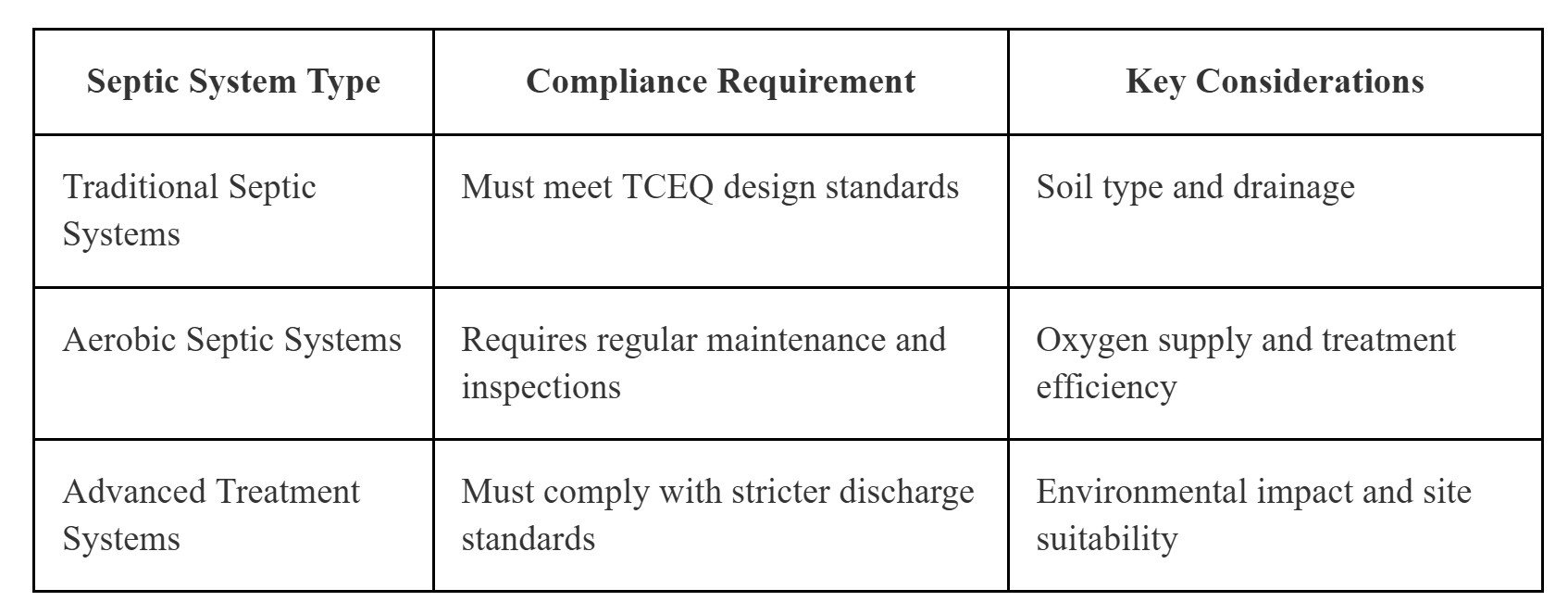
Knowing these requirements helps you choose a system that fits your land and stays within TCEQ rules.
What are the inspection and maintenance guidelines for septic systems in these counties?

Inspections and routine upkeep are the best ways to extend a system’s life and avoid failures. Follow TCEQ and county guidance for inspection frequency and keep good records of service and repairs.
Frequency and requirements for OSSF inspections in Burnet, Lampasas, and Travis Counties
Annual inspections: Have your system checked at least once a year to catch issues early.
Documentation: Keep records of inspections, pumpings, and repairs to show compliance and track system health.
Local health department requirements: Each county may set specific inspection or reporting rules — check with your local office for details.
Best practices for septic system maintenance to ensure compliance
Regular pumping: Plan tank pumping every 3–5 years, depending on household size and tank capacity.
Monitor water usage: Spread out laundry and dishwasher loads to avoid overloading the system.
Avoid harmful chemicals: Don’t flush solvents, strong disinfectants, or grease — they harm the bacteria your system needs to work.
What are common challenges and FAQs about TCEQ septic permits in Texas Hill Country?
Homeowners commonly run into delays, paperwork questions, or site limitations. Knowing the typical issues ahead of time will make the permit process smoother.
How long does the septic permit process take in each county?
Permit timelines depend on county workloads and the completeness of your application. Expect roughly:
Burnet County: Typically 2–4 weeks, assuming the application and site review are complete.
Lampasas County: Often a similar timeline, though scheduling at the health department can cause delays.
Travis County: Can take longer — commonly 4–6 weeks — due to higher demand and added review steps.
What are typical costs and fees associated with septic permits?
Permit and installation costs vary by county, system type, and site complexity. Budget for application, inspection, and installation expenses when planning a project.
Further details about how onsite wastewater systems are defined and how permitting fees are handled in Texas can help explain fee structures and regulations.
Texas Onsite Wastewater System Definition & Permitting Fees In Texas, onsite wastewater systems handle domestic sewage for properties not served by municipal sewer and typically process no more than 5,000 gallons per day. State law requires periodic review of statutes (a sunset process), and past changes to a $10 research fee have affected how funds were collected and used. Some fee practices continued even after funding shifts, which has created confusion about how collected fees are applied. Onsite Wastewater Research Funding—Texas Model, A Jantrania, 2020
Application fees: Often range from $100 to $300, depending on county.
Inspection fees: Vary with system complexity and local rates.
Installation costs: Full system installation typically runs $7,000–$28,000, depending on system type, home size, and site conditions.
Where can you find resources and assistance for septic permits in Burnet, Lampasas, and Travis Counties?
If you need help with permits or system questions, local health departments and the TCEQ are the first places to check. You can also hire experienced local contractors who know the county procedures and TCEQ rules.
Contact information for county health departments and TCEQ offices
Burnet County Health Department: Contact for local regulations and application help.
Lampasas County Health Department: For guidance on inspections and septic requirements.
Travis County Health Department: Resource for homeowners dealing with permits and compliance issues.
For septic services in these counties, Liberty Septic and Excavating covers Burnet, Lampasas, and Travis counties and provides hands‑on, compliant septic solutions.
How Liberty Septic and Excavating can help with your septic permit needs
Liberty Septic and Excavating handles septic installation, repairs, and maintenance across the Hill Country. Owner and founder Ricky Maynard is a licensed OSSF installer in Texas and brings practical, certified experience to each job. We help homeowners through the permit application, recommend the right system for the site, and provide ongoing maintenance so your system stays legal and reliable. Call us at 512‑577‑4862 for assistance.
To learn more about Liberty Septic and Excavating and our service standards, visit our website.
If you have questions or need immediate help, please contact us. We’re here to make septic permitting and maintenance as simple as possible.