Septic System Safety & Environmental Protection — Essential Standards for Safe Installation and Compliance
Septic systems treat household wastewater where sewers aren’t available. This concise guide explains the permits, inspections, worker-safety measures, and environmental practices that keep systems compliant, reduce risk, and extend service life.
Key Takeaways
- Obtain permits and follow local codes.
- Use licensed contractors and perform site evaluations.
- Schedule regular inspections and pumping.
- Enforce PPE, training, and OSHA-aligned procedures.
- Protect groundwater with proper siting and materials.
- Avoid skipping permits, maintenance, or qualified installers.
- Follow EPA guidance where applicable.
- Inspect systems every 1–3 years.
- Prevent leaks with pumping, inspections, and proper disposal.
Regulatory Requirements
Local and state rules govern permitting, siting, installation, and inspections to protect groundwater and public health. Confirm permit steps, applicable codes, and inspection timing before work starts so installations meet required standards.
| Requirement | Description | Importance |
|---|---|---|
| Permits | Official authorization and site-specific conditions for installation | Ensures work follows local health and environmental rules |
| Inspections | Site and post-installation checks by health or building officials | Confirms the system is installed correctly and operates safely |
| Documentation | Records of design, installation, and maintenance activities | Provides accountability and supports future service or resale |
Keeping permits and documentation up to date reduces liability and preserves water quality.
Best Practices
Follow a clear, documented process: assess the site, hire certified installers, and commit to scheduled maintenance. These steps reduce failures and long-term costs.
- Site Evaluation: Test soils, groundwater depth, and grades to select the right system and placement.
- Licensed Contractors: Use certified installers who handle permits and meet code.
- Routine Maintenance: Maintain a schedule for inspections and pumping.
Standardizing Septic System Installation & Certification
Efforts to upgrade and standardize installation procedures — including certification programs — improve system performance and consistency. These measures support better long-term outcomes for septic systems and their maintenance practices.
Local contractors with proven experience in site evaluation and maintenance can help avoid common installation issues and prolong system life.
Environmental Considerations
Protecting soil and groundwater is central to septic planning. Proper siting, soil assessment, and low-impact materials minimize contamination risk and protect water resources.
- Soil Quality: Match system type to soil permeability and absorption capacity.
- Groundwater Protection: Maintain setbacks and separation distances from wells and waterways.
- Sustainable Practices: Use durable, low-impact components and limit landscape disturbance.
Prioritize these practices to protect ecosystems and public health.
Common Pitfalls to Avoid
Frequent errors include skipping permits, neglecting maintenance, and hiring inexperienced installers. Each raises the chance of failures, fines, and costly remediation.
- Neglecting Permits: Obtain required approvals to avoid enforcement and corrective work.
- Ignoring Maintenance: Inspections and pumping prevent failures.
- Unqualified Installers: Use licensed professionals to ensure compliant work.
Proactive compliance and upkeep save time and money.
What Are the Key Worker Safety Measures in Septic Installation?
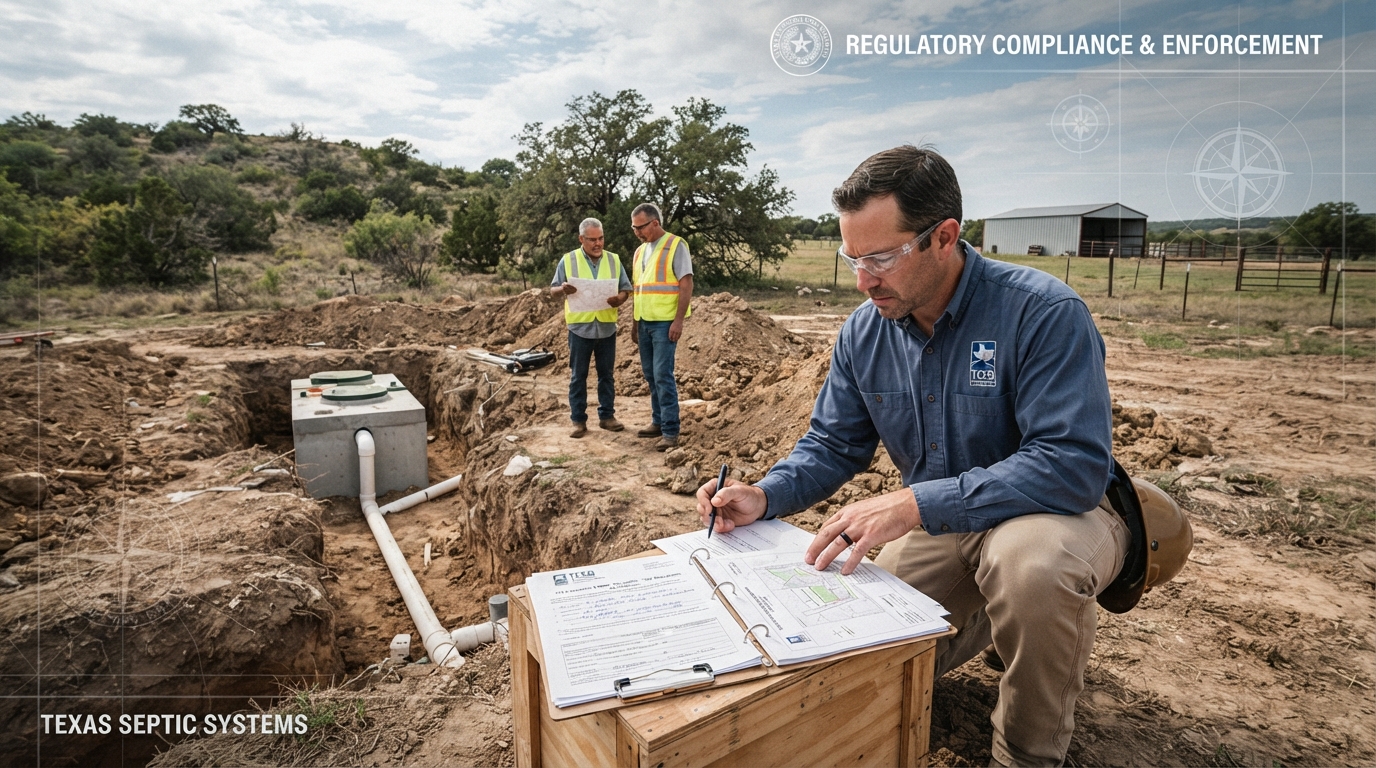
Worker safety on excavation sites relies on PPE, trench protections, confined-space protocols, and documented training that align with OSHA requirements.
Which Personal Protective Equipment Is Required for Septic Workers?
Provide and enforce PPE to limit exposures: gloves, eye protection, sturdy footwear, and hard hats. Add specialized gear for confined spaces or chemical tasks.
- Gloves: Chemical-resistant and durable work gloves.
- Goggles: Splash and debris protection.
- Hard Hats: Head protection on excavation sites.
Consistent PPE use reduces injuries and exposure risks.
How Do OSHA Standards Ensure Worker Safety During Septic Installation?
OSHA sets mandatory procedures for excavation, confined-space entry, hazard communication, and equipment operation, requiring training and routine inspections to correct hazards before incidents occur.
- Safety Protocols: Follow shoring, sloping, and confined-space rules.
- Training Requirements: Document hazard and emergency training for crews.
- Regular Inspections: Inspect sites and equipment before and during work.
OSHA-aligned practices reduce liability and protect crews.
Septic System Worker Safety: OSHA & EPA Regulations
Regulatory efforts from OSHA and the EPA have focused on strengthening worker protections and aligning safety requirements for septic system work. These regulations address excavation safety, exposure controls, and training standards to reduce occupational hazards.
How Can Environmental Protection Be Maintained During Septic System Installation?
Secure permits, document work, perform thorough site evaluations, and use erosion controls and buffer measures to protect nearby water sources and minimize disturbance.
- Permitting & Documentation: Keep records for compliance and future service.
- Site Evaluation: Identify sensitive zones and groundwater depth to guide siting.
- Installation Best Practices: Use approved methods and materials to limit leakage risk.
These actions help contractors meet obligations and protect ecosystems.
What Best Practices Minimize Environmental Impact of Septic Systems?
Choose proper siting, durable low-impact materials, and a maintenance plan. Where needed, consider advanced treatment to reduce effluent risk in sensitive locations.
- Proper Siting: Use separation distances and suitable soils.
- Environmentally Friendly Materials: Select long-lasting, low-footprint components.
- Maintenance: Schedule inspections and pumping to maintain performance.
Consistent upkeep and mindful waste practices protect soils and waterways.
How Do EPA Regulations Guide Septic System Environmental Compliance?
The EPA offers guidance on permitting, site assessment, and installation standards that inform local programs and homeowner outreach to reduce failure rates and encourage maintenance.
- Permitting Overview: Follow approval steps and any attached conditions.
- Site Evaluation: Use accepted methods to assess soils and setbacks.
- Installation Standards: Meet design and performance expectations in permits.
EPA resources support ongoing maintenance and education to prevent failures.
EPA Guidelines for Onsite Sewage Systems & Maintenance
The U.S. EPA notes that a meaningful share of residential onsite sewage systems can fail at any time and recommends regulatory approaches that lower failure rates. Guidance stresses the importance of homeowner education and periodic reminders about maintenance to keep systems functioning.
What Are the Regulatory Compliance Requirements for Septic Tank Installation?
Compliance includes obtaining permits, following installation standards, and passing required inspections so tanks and drainfields meet health and environmental criteria.
- Necessary Permits: Secure approvals before construction.
- Installation Standards: Use code-compliant designs and materials.
- Inspection Processes: Schedule and pass inspections to verify functionality.
Meeting these requirements ensures safer, durable systems.
Which Septic System Installation Regulations Must Contractors Follow?
Contractors must obtain permits, keep accurate installation records, and coordinate inspections. Staying current with local rules protects clients and avoids rework.
- Permit Requirements: Verify and obtain necessary permits.
- Documentation: Maintain design and maintenance records.
- Inspection Coordination: Arrange inspections at required stages.
Proper records and coordination reduce compliance risks.
How Are Safety Standards Integrated Into Septic Installation Procedures?
Safety is integrated through permit checks, site hazard assessments, and construction controls such as shoring and confined-space procedures to protect workers and neighbors.
- Permit Checks: Confirm safety conditions before work.
- Site Planning: Plan access, equipment staging, and erosion control.
- Design: Use designs that meet safety and environmental requirements.
Embedding safety across the project lowers incidents and improves outcomes.
How Is Septic System Maintenance Important for Safety and Environmental Protection?
Regular maintenance—inspections, pumping, and proper disposal—prevents backups, leaks, and contamination, protecting health and reducing long-term costs.
- Health Risks: Neglect can expose communities to pathogens.
- Environmental Protection: Maintenance prevents pollutants from reaching water.
- Cost Efficiency: Preventive care is less costly than major repairs.
Prioritizing maintenance keeps systems compliant and economical.
How Often Should Septic Systems Be Inspected for Leaks and Failures?
Have professionals inspect systems every 1–3 years, depending on tank size and household use, and watch for slow drains, odors, or wet spots over the drainfield.
- Frequency: Arrange inspections every 1–3 years as recommended.
- Signs: Slow drains, gurgling, odors, or standing water over drainfields.
- Early Detection: Finding issues early limits repair scope and cost.
Routine checks and prompt repairs preserve system health.
What Are Effective Leak Prevention Strategies for Septic Systems?
Prevent leaks with scheduled pumping, regular inspections, and careful household disposal habits (no wipes, grease, or harsh chemicals).
- Pumping: Pump tanks on schedule for your household size.
- Inspections: Check components and drainfields periodically.
- Waste Practices: Avoid flushing non-biodegradable items and limit heavy water use.
Consistent practices reduce leaks and extend system life.
Frequently Asked Questions
What are the environmental impacts of poorly installed septic systems?
Poor installations can release untreated wastewater to soil and water, contaminating wells and habitats. Proper siting, installation, and maintenance are the primary defenses.
How can homeowners ensure their septic system is compliant with local regulations?
Obtain permits, hire licensed contractors, and keep accurate records. Follow local rules and schedule required inspections.
What are the signs that a septic system may be failing?
Look for slow drains, gurgling, foul odors, soggy drainfield areas, or sewage backups; call a licensed professional if these appear.
What role do soil conditions play in septic system installation?
Soils and permeability determine drainfield performance; clay may need alternate designs while sandy soils drain well.
How can regular maintenance extend the lifespan of a septic system?
Inspections and pumping remove solids and catch problems early, preventing major failures and extending service life.
What are the best practices for sustainable septic system installation?
Use long-lasting materials, minimize excavation, choose systems suited to the site, and keep up with maintenance and homeowner education.
What should homeowners do if they suspect their septic system is leaking?
Limit water use, avoid stressing the system, and contact a licensed septic professional immediately for inspection and repair.
Conclusion
Secure permits, evaluate sites, hire qualified installers, and maintain systems on schedule. These steps protect public health, preserve water quality, and extend septic system life. Consult local authorities and qualified professionals for work or service to keep systems compliant and reliable.