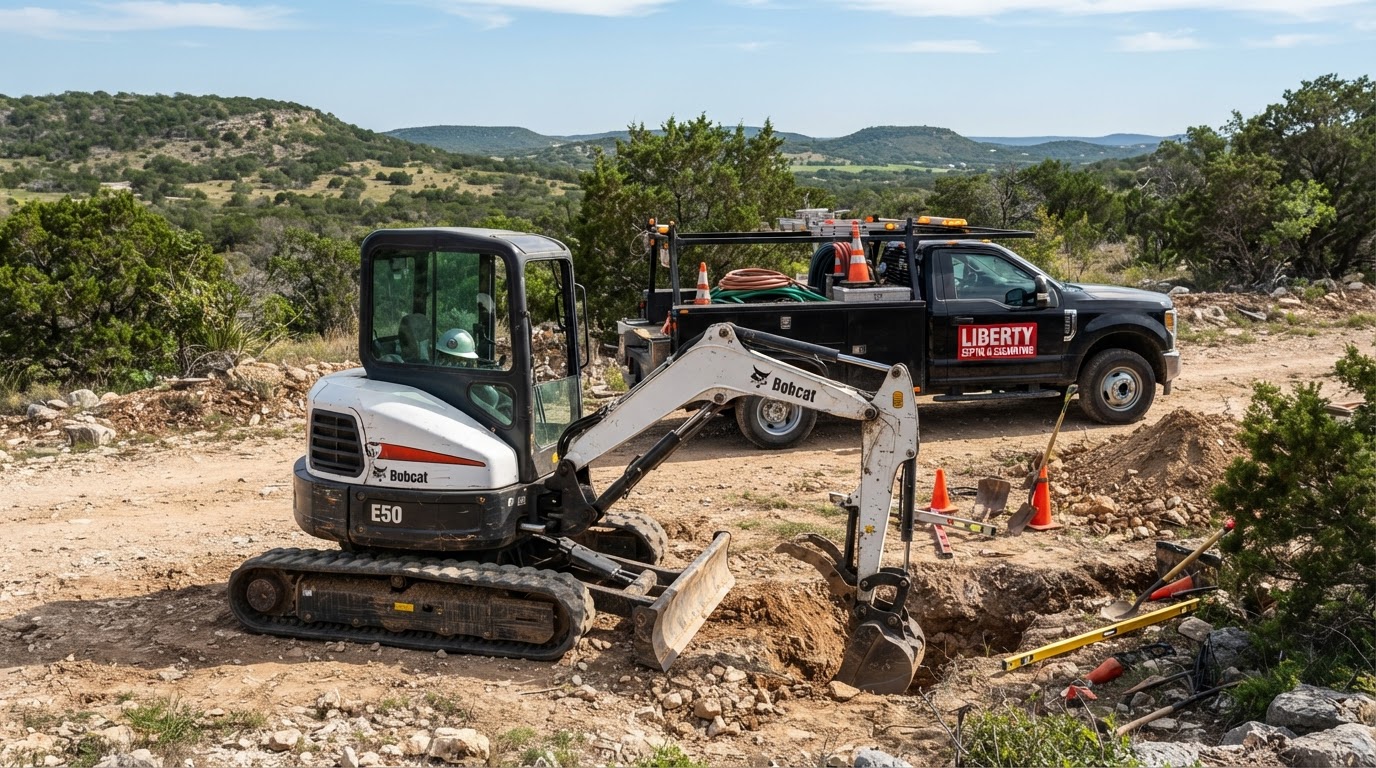
Central Texas Septic Installation & Excavation — Costs, Care, and Licensed Pros

By Ricky Maynard, Liberty Septic & Excavating
In much of Central Texas, septic systems replace municipal sewers. This guide explains how installation costs are set, what routine care looks like, and why licensed professionals matter so homeowners and businesses can plan with fewer surprises.
Onsite systems are often a practical, more affordable option for communities without centralized sewage service.
Affordable Onsite Wastewater Solutions in Texas
A review of first-time wastewater projects in underserved Texas communities shows high upfront costs and barriers to service. Lessons learned include the need for affordable financing, and that properly designed onsite systems can be a realistic alternative when centralized systems are too expensive for a community to build. Analysis of program outcomes and lessons learned on implementing first-time wastewater infrastructure in underserved communities in Texas from 1995 through…
ME Giner, 1995
Key Takeaways
- Costs vary by system type, site conditions, and local code.
- Materials, drain-field components, labor, and permits drive price.
- Licensed installers ensure code compliance and smoother inspections.
- Installation steps: evaluation, permitting, installation, inspection, cleanup.
- Common failures: backups, slow drains, and failing drain fields.
- Pump every 3–5 years and schedule routine inspections.
- Excavation (site prep, trenching, backfill) needs proper permitting.
- Commercial crews must meet licensing and safety standards.
- Permit applications require local consultation and documentation.
What Affects Septic Tank Installation Cost in Central Texas?
Price depends on system type (conventional, aerobic, or advanced), soil and site access, tank material (concrete vs. plastic), labor complexity, and local permit or inspection fees. Assess these early to set a realistic budget.
Key Factors Influencing Residential and Commercial Septic Installation Prices
Major cost drivers include:
- Material choices: Tanks, distribution boxes, and drain-field parts differ in cost and longevity.
- Labor expenses: Difficult access, rock, steep grades, or complex layouts increase labor time.
- Permit requirements: Soil tests, specific designs, and inspections add time and fees.
Engage a licensed installer early to balance upfront cost, maintenance needs, and local code requirements.
How Licensed Septic Installers Ensure Quality and Compliance
Licensed installers know local health-department rules, site evaluation practices, and construction standards. They locate the correct tank siting, set pipe slopes, follow backfill procedures, and manage inspections so systems perform reliably over time.
Federal agencies such as the EPA emphasize regulatory compliance and offer tools and training resources for septic-system care and installation.
Septic System Compliance, Installation & Maintenance
The EPA enforces permit conditions and provides resources to support proper septic care — from homeowner guidance and toolkits to training and funding options for community systems. These resources help ensure installations meet public-health and environmental standards.
To Build a Septic System: An Analysis of EPA's New Environmental Justice Policies for Rural Communities Lacking Adequate Wastewater Sanitation, 2023
How Do Licensed Septic Installers Perform Septic System Installation and Repair?
The installation sequence keeps projects safe and compliant:
- Initial consultation and estimate: Property inspection, needs assessment, and a written quote with timeline.
- Site evaluation and permitting: Soil tests, layout, and permit applications before digging.
- Installation and final inspection: Install, have inspections performed, then clean and restore the site.
Following these steps reduces delays and avoids costly rework.
Common Residential Septic System Repairs and Solutions in Texas
Address problems early to limit expense. Frequent repairs include:
- Backups: Often caused by clogs, damaged baffles, or a full tank; a pro can diagnose and pump or clear the line.
- Slow drains: May indicate partial blockages or drain-field stress and should be evaluated promptly.
- Drain-field failures: Saturation or collapse can require repair or replacement; early detection reduces damage.
Use licensed technicians for accurate diagnosis and safe repairs.
What Are Essential Septic System Maintenance Tips for Central Texas Homeowners?
Routine care extends system life. Key tips:
- Pumping and inspection: Pump every 3–5 years, sooner for larger households or heavy use.
- Watch for warning signs: Sewer odors, consistently slow drains, wet or unusually green areas, or gurgling noises.
- Regular investment: Small, scheduled inspections and pumping prevent costly failures.
Follow manufacturer guidance for mechanical parts and set a maintenance schedule with your licensed installer.
Which Excavation Services and Permits Are Required for Septic Projects in Central Texas?
Excavation for septic systems usually includes site preparation, trenching, and backfill, all coordinated with permits and inspections.
- Site preparation: Protect utilities and landscaping before digging.
- Trenching: Accurate trenches for inlet/outlet lines and drain fields ensure proper flow.
- Backfilling: Correct compaction around tanks and pipes prevents settling.
Confirm permit requirements and hire contractors experienced with septic excavation to avoid code violations and rework.
Overview of Commercial Excavation Contractors and Safety Regulations
Commercial excavation must meet standards for crew safety and environmental protection. Key points:
- Qualifications: Verify licenses, insurance, and references.
- Safety rules: Trench safety, utility locates, and erosion controls are standard.
- Compliance: Proper procedures reduce liability and schedule delays.
Choose contractors who prioritize safety and follow permitting procedures.
Guide to Obtaining Excavation and Septic Permits in Texas
Permitting follows straightforward steps:
- Consult local authorities: Contact your county or city health department for requirements.
- Prepare documentation: Provide site plans, designs, soil tests, and required documents.
- Submit applications: Apply to the proper office and allow time for review and revisions.
Working with a licensed installer or engineer familiar with local procedures speeds approval and reduces application errors.
Texas Licensed Septic System Installers & Engineers
In Texas, installers who complete required training and pass state exams hold licenses such as Installer II. Designs for onsite sewage facilities (OSSFs) must be prepared by a registered professional engineer (PE) or a registered sanitarian (RS) authorized to practice in Texas with current registration.
Selecting and permitting, 1999
Frequently Asked Questions
What are the signs that my septic system needs repair?
Look for foul odors, slow or backed-up drains, wet or very green patches above the drain field, and gurgling noises. Call a licensed septic professional for diagnosis before problems escalate.
How often should I have my septic system inspected?
Inspect at least every three years as a general rule; inspect more often for mechanical systems or larger households. Regular checks catch small issues early.
Can I perform maintenance on my septic system myself?
You can adopt good habits — conserve water, avoid flushing non-biodegradables, and use septic-safe products — but pumping and repairs should be done by licensed professionals.
What should I do if my septic system backs up?
Stop using water, avoid chemical fixes that may cause harm, and contact a licensed septic technician. They will diagnose whether it's a clog, a full tank, or a field problem and recommend the correct remedy.
Are there environmentally friendly options for septic systems?
Yes. Advanced treatment units (for example, aerobic systems) improve treatment and lower environmental impact. Biodegradable products and reduced harsh chemicals help protect groundwater.
What are the consequences of neglecting septic system maintenance?
Neglect can cause system failure, backups, costly repairs, and contamination risks. Routine pumping and inspections are far less expensive than major repairs.
How can I choose the right septic system for my property?
Begin with a site evaluation of lot size, soil type, and local rules. A licensed installer or engineer can recommend a system that balances cost, maintenance, and performance. Contact our team for a free estimate.
Conclusion
Licensed installation and routine maintenance protect your property, finances, and local environment. Understand costs, permits, and local rules, and work with experienced professionals who know Central Texas conditions to ensure a reliable septic system.
Liberty Septic and Excavating is TCEQ-licensed and has been serving Burnet, Williamson, Travis, Llano, and Lampasas counties since 2007. Our team handles everything from initial site evaluation and permitting to installation, inspection, and long-term support.
→ Learn more about our team and commitment to quality.
→ We proudly serve multiple service areas across Central Texas.
→ Contact us today for reliable septic solutions.
Ready to Get Started?
Liberty Septic & Excavating serves Central Texas with TCEQ-licensed septic installation, repair, and excavation. Get your free estimate today.
Licensed · Insured · TCEQ-Compliant · Free Estimates · No Obligation