Excavation & Site Prep: Getting Your Hill Country Property Build-Ready
Building a home or commercial structure in the Texas Hill Country is a dream for many, but the reality of breaking ground here is notoriously tough. Beneath the picturesque cedar trees and rolling hills lies solid limestone, caliche, and challenging slopes. Getting a property truly "build-ready" requires much more than just moving some dirt around.
Proper excavation and site preparation are the foundation of your entire project. Mistakes made during this phase—like poor drainage planning or inadequate compaction—will haunt the structure for decades. Here is what you need to know about preparing your Central Texas property for construction.
1. Land Clearing: The First Step
Before any grading or digging can happen, the site must be cleared. In counties like Burnet, Llano, and Travis, this usually means dealing with dense thickets of Ashe juniper (commonly called cedar), mesquite, and large surface rocks.
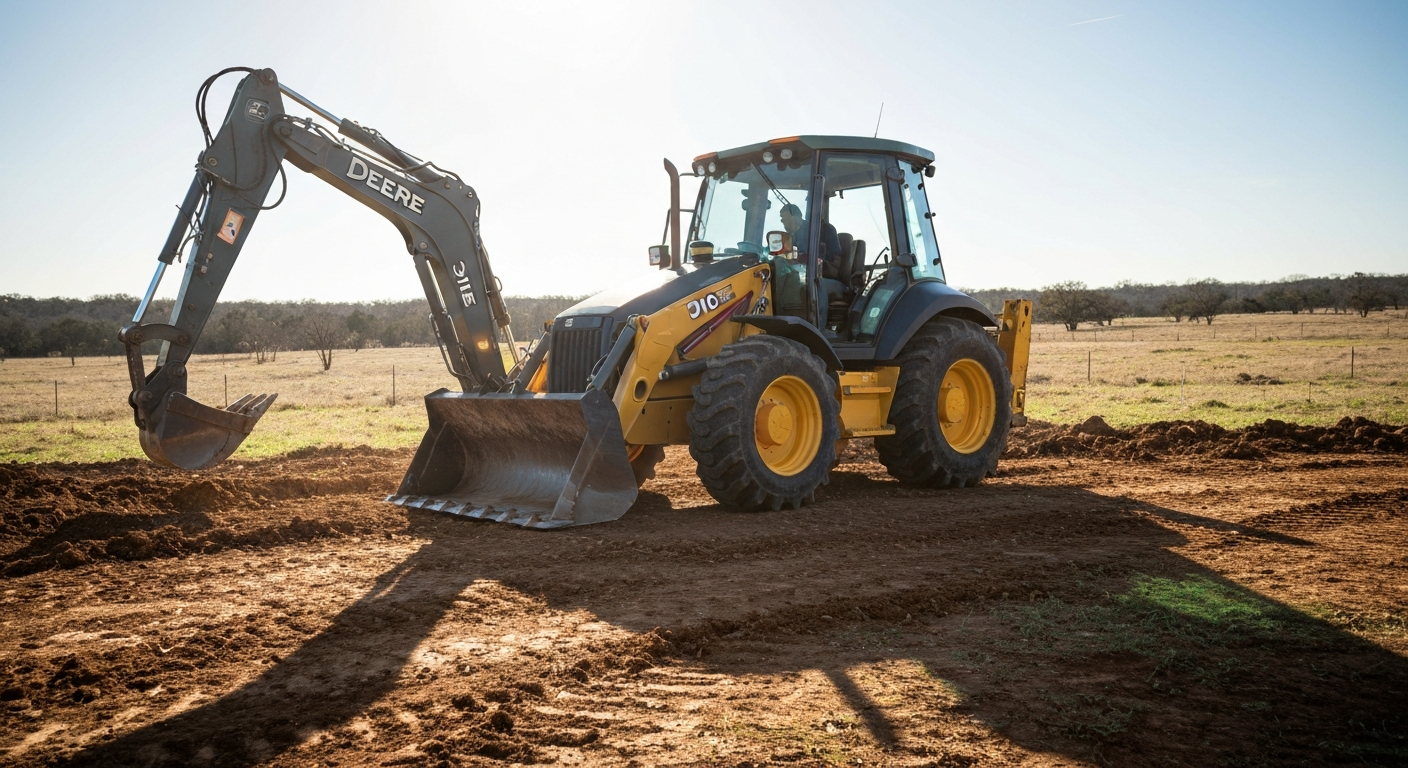
Professional land clearing involves using heavy machinery like bulldozers and excavators with specialized attachments to remove vegetation efficiently while preserving the heritage oaks and mature trees you want to keep. A good excavation crew will also handle the disposal of the brush, whether that means hauling it off, burning it (when county burn bans allow), or mulching it on-site.
The Importance of Root Removal
When clearing a building pad site, it's not enough to just cut trees down to the stump. The root systems must be completely grubbed out. If roots are left under a foundation, they will eventually rot away, leaving voids in the soil that can cause the foundation to settle and crack.
2. Grading and Drainage Solutions
Water is the enemy of any foundation. In the Hill Country, where topsoil is thin and rock sheds water quickly, flash flooding and heavy runoff are major concerns. Grading is the process of shaping the land to direct water away from your future home.
A professional excavation contractor will shoot elevations and grade the site so that the building pad sits high and dry. This often involves cutting into slopes, building retaining walls, or creating swales (shallow drainage ditches) to safely route rainwater around the structure and toward natural drainage areas.
3. Building Pad Preparation
Your home's foundation is only as good as the dirt it sits on. Creating a building pad involves removing the loose, organic topsoil down to a stable subgrade—which in Central Texas often means hitting solid rock.
Once the subgrade is established, select fill dirt is brought in. This fill must be spread in thin layers (lifts) and compacted heavily using a vibratory roller. The moisture content of the dirt has to be just right to achieve maximum compaction. A properly constructed building pad prevents the uneven settling that leads to cracked slabs and stuck doors down the road.
4. Utility Trenching Through Rock
You can't build a house without water, electricity, and a septic system. Trenching for utilities in the Hill Country is rarely a simple task. Standard trenchers often bounce right off our limestone.
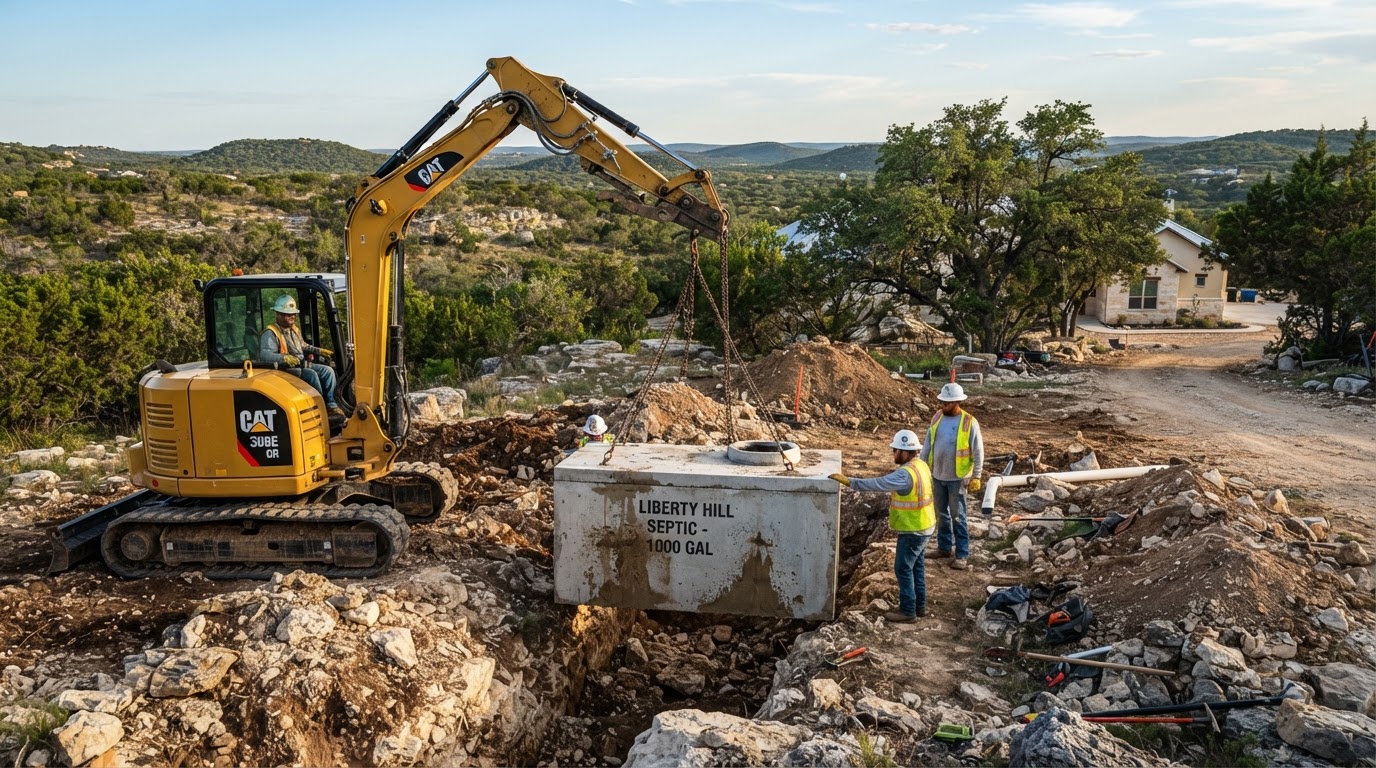
Experienced local crews come prepared with heavy excavators and rock saws to cut trenches to the required depths. Whether it's running a water line from a well, trenching for underground electrical conduit, or digging the trenches for a septic drain field, having the right heavy equipment on-site is non-negotiable.
Why Local Expertise is Critical
Every region has its quirks, but the geology of Central Texas is particularly unforgiving to inexperienced operators. A contractor from outside the area might underestimate the amount of rock breaking required, leading to massive delays and unexpected cost overruns.
Local contractors know the soil profiles, understand the county regulations, and own the heavy-duty equipment necessary to handle limestone and caliche. When you hire local, you're paying for the assurance that the crew knows exactly what lies beneath the surface before the first bucket of dirt is moved.
Ready to Break Ground?
Liberty Septic & Excavating has the heavy equipment and local expertise to handle the toughest Hill Country terrain. From land clearing and grading to full septic installations, we get your site build-ready. Contact us today for a free excavation estimate.
Request a Free Estimate