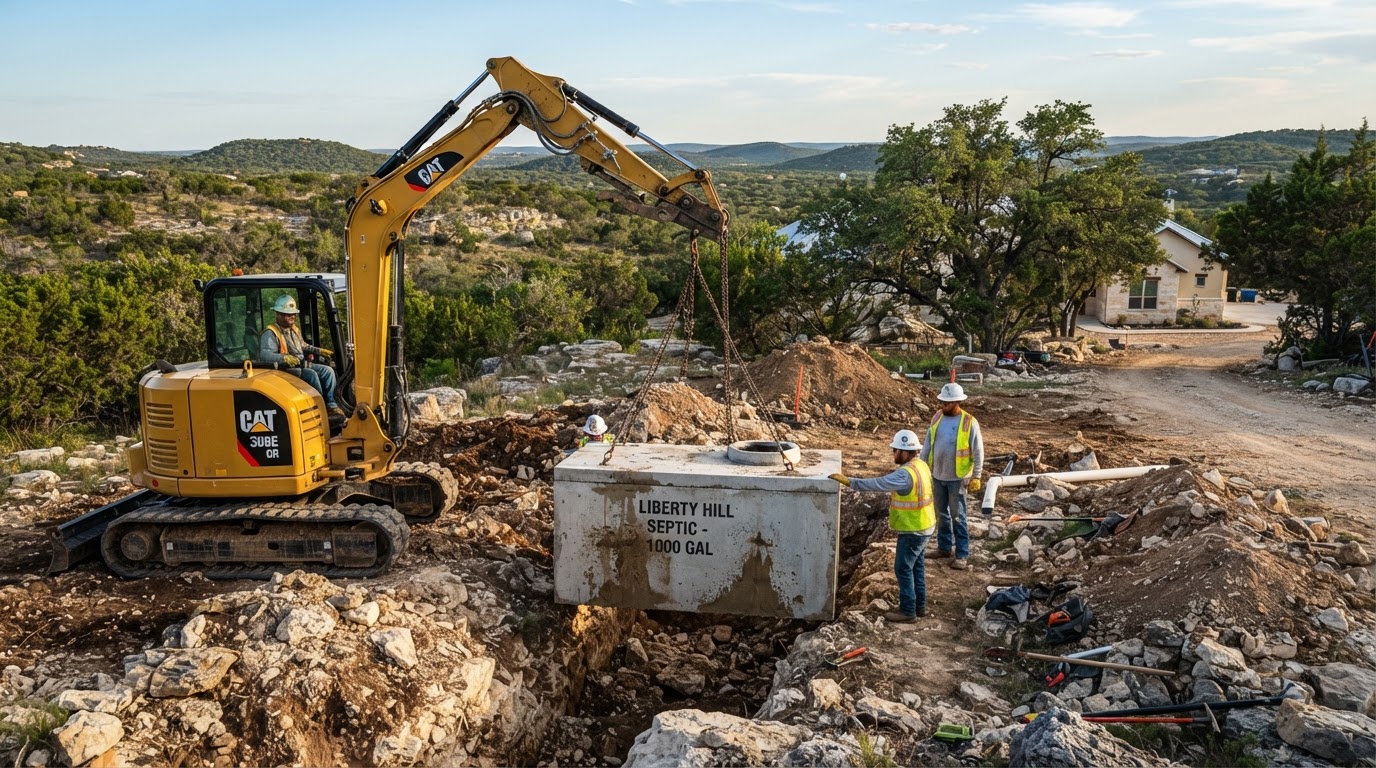
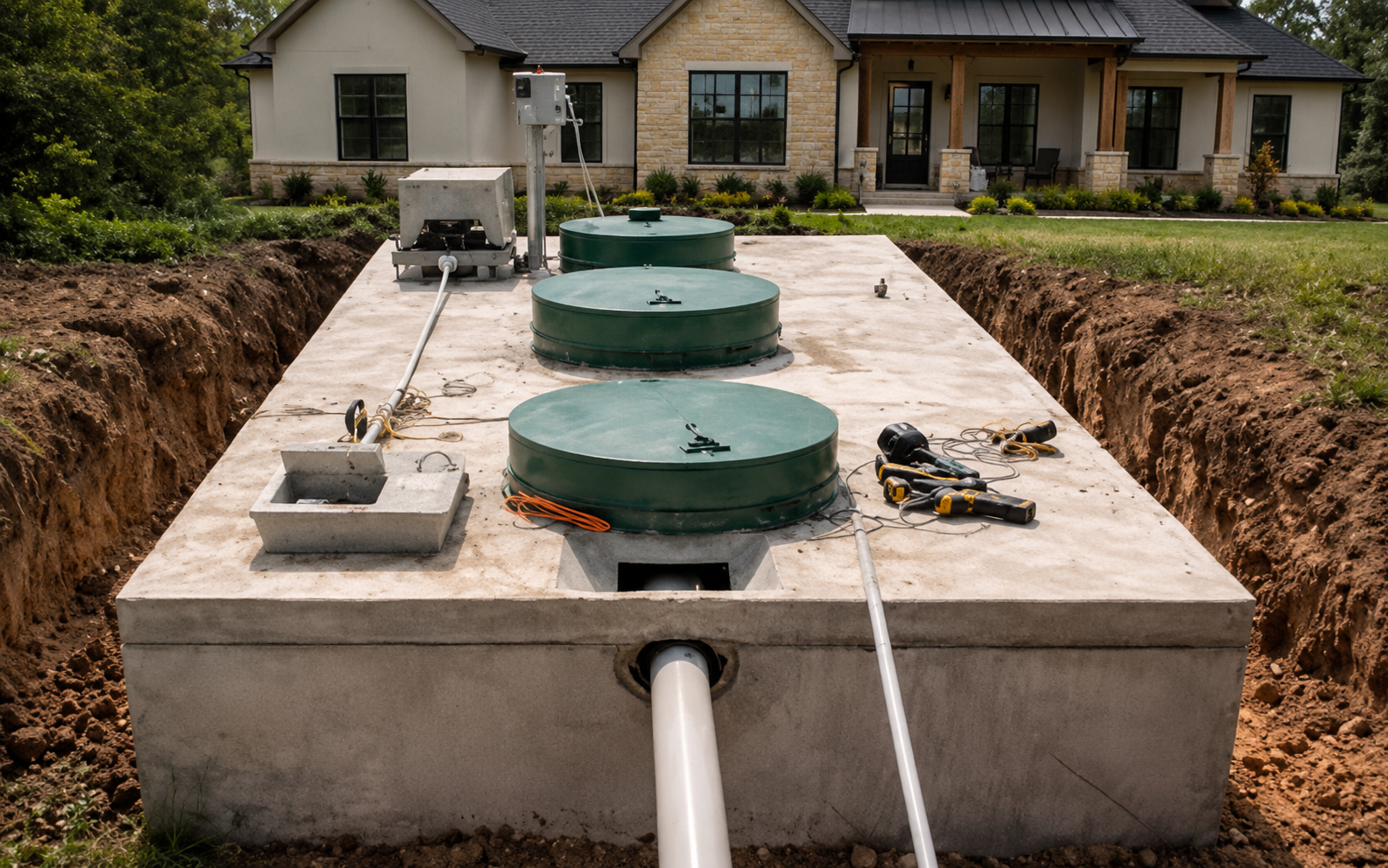
Septic System Installation in Liberty Hill: Essential Considerations for Homeowners
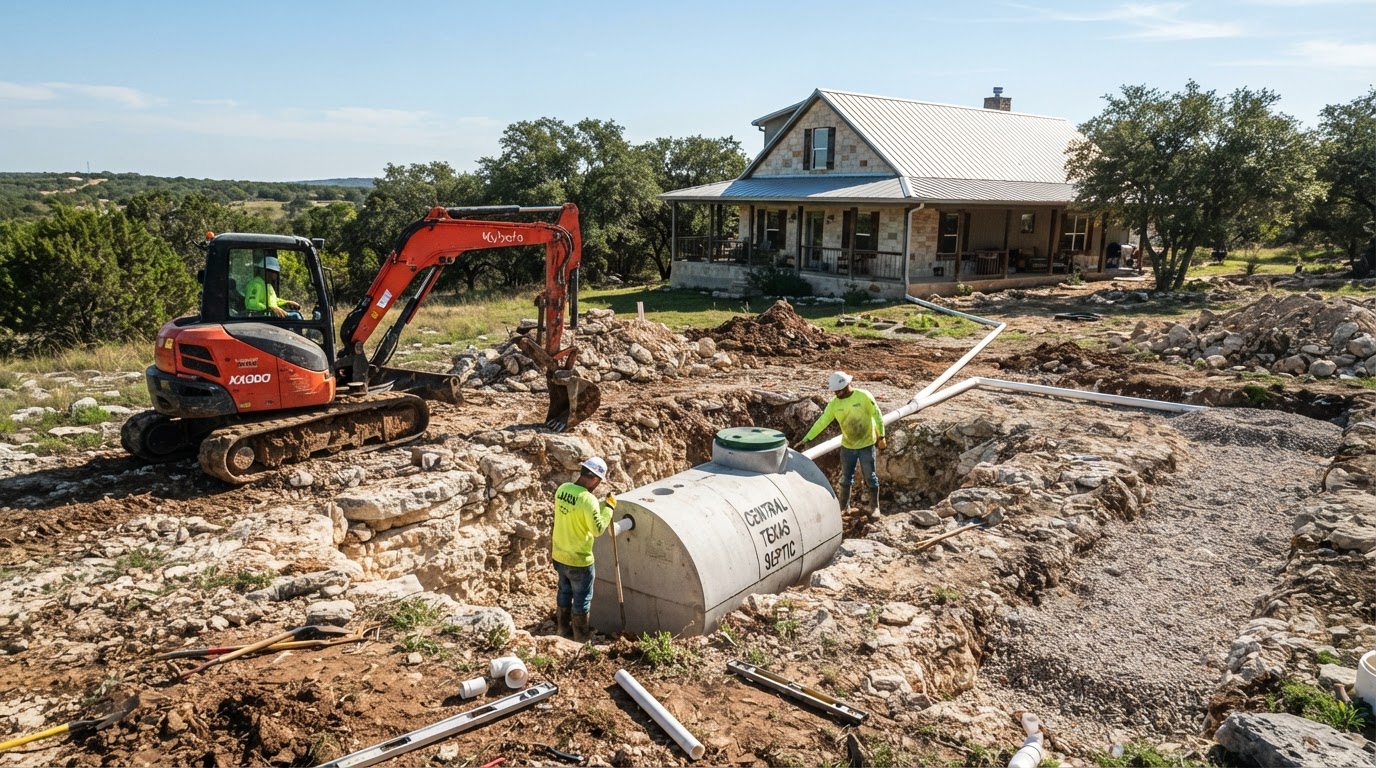
Installing a septic system in Liberty Hill requires balancing local regulations, site constraints, and ongoing maintenance. This guide highlights the critical steps — permits, site evaluation, system options, maintenance, and common mistakes — so you can plan a compliant, durable system for your property.
Key Takeaways
- Follow local and Texas state septic rules and secure required permits.
- Hire a professional for soil, drainage, and site assessments before design.
- Choose a system type based on soil, space, and code requirements.
- Pump tanks on a 3–5 year schedule and inspect periodically to avoid failures.
- Avoid skipping permits, neglecting maintenance, or using inexperienced installers.
- Percolation tests and soil profiles guide drainfield sizing and design.
- Local setbacks, inspections, and siting rules protect health and waterways.
- Good grading and careful excavation improve long-term performance.
Local Regulations and Permits
Before work begins, confirm permit, plan, and inspection requirements with the local health department. Liberty Hill permits are handled locally and may need to meet TCEQ standards; parcel-specific rules can affect design and timing. Missing permits can cause delays, fines, or required rework.
Keeping permits and maintenance top of mind matters: Texas law and local practice set clear homeowner responsibilities for on-site sewage systems.
Texas Septic System Regulations & Homeowner Maintenance
In Texas, on-site sewage facilities (OSSF) are widespread because many areas have low housing density. These systems are often installed and then forgotten — problems from poor maintenance aren't always immediate or obvious. Permitting regulations were introduced in 1987 and are enforced at the local level. While the regulations specify maintenance and reporting expectations, ongoing upkeep is the homeowner's responsibility. Poor design or lack of maintenance can cause system failure and the release of sewage into the environment.
For expert Liberty Hill septic installation, local contractors such as Liberty Septic and Excavating can assist with permitting, site plans, and inspections to keep the project moving.
The state has also supported research and demonstration projects to improve on-site wastewater treatment and lower costs for consumers.
Texas Onsite Wastewater System Laws & Research Funding
In the late 1980s and early 1990s, Texas lawmakers passed a law requiring the state regulatory agency to fund competitive grants and applied research for on-site wastewater treatment improvements. This "$10 research fee" model funded research and demonstration projects from 1992 through 2012. In Texas, onsite wastewater systems are defined as systems that dispose of domestic sewage generated on the same site, typically producing no more than 5,000 gallons per day and excluding most industrial liquid wastes.
Site Evaluation Techniques
A qualified site evaluation confirms whether the property can support a septic system and which type is appropriate. Assessors test soil texture, percolation rates, groundwater depth, and surface drainage to inform tank size and drainfield layout.
Proper siting matters: soil quality strongly affects system performance and can even influence property value.
Septic System Siting, Soil Quality & Property Value
Soil-based septic systems serve roughly one in four U.S. households. The design and quality of the soil are critical for system function. Installing systems on shallow or saturated soils can lead to incomplete treatment of organic and bacterial pollutants. Untreated or partially treated wastewater impacts residents, contaminates groundwater and local waterways, and can harm public health and property values.
Importance of Professional Site Assessment
A professional can identify hidden limits — shallow bedrock, seasonal high water tables, or slow percolation — that require alternative designs. Early assessment reduces redesigns and unexpected costs.
Soil Tests and Drainage Assessments
Percolation tests and soil profiles show absorption rates and layer structure; drainage studies clarify surface water risks. Use these results to size tanks, locate drainfields, and decide if pretreatment or elevated systems are needed.
Types of Septic Systems
System selection balances cost, maintenance, and site suitability. Common types are listed below.
| System Type | Description | Suitability |
|---|---|---|
| Conventional Systems | Tank plus gravity drainfield relying on natural soil absorption. | Best for well-drained soils with enough area for a drainfield. |
| Aerobic Systems | Mechanical treatment that adds oxygen; needs power and servicing. | Useful where soils drain poorly or space is constrained. |
| Mound Systems | Engineered soil mounds placed above native ground to provide treatment. | Used on shallow or high-water sites where a conventional field won't work. |
Work with a qualified designer or contractor to match the system to your site and code requirements.
Maintenance Practices
Routine maintenance preserves function and avoids costly repairs. Key actions are simple and effective.
- Regular Pumping: Pump every 3–5 years (more often for heavy use) to prevent solids reaching the drainfield.
- Inspections: Schedule periodic checks with a licensed professional to catch problems early.
- Proper Use: Don't flush wipes or non-biodegradable items and limit harsh chemicals that harm tank biology.
Consistent care protects your investment and local water quality.
Common Pitfalls to Avoid
Common costly errors include skipping permits, delaying maintenance, and hiring inexperienced installers. Each increases the risk of failure and added expense — plan and hire experts to avoid these issues.
What Are the Septic System Installation Requirements in Liberty Hill?
Typical requirements include a permit application with site plans, percolation and soil profile tests, and inspections during installation. Follow local health department guidance early to avoid delays.
- Permit Application: Submit a complete plan showing system layout and relevant site details.
- Soil Testing: Provide perc and profile results demonstrating suitability.
- Inspections: Schedule checks at the stages required by the permit.
How Do Neighborhood Septic System Requirements Affect Installation?
Covenants or neighborhood rules may add setbacks, limit system types, or require additional approvals. Review neighborhood and public rules before finalizing design.
Site Assessment Importance
A careful assessment flags neighborhood constraints and helps the designer site the system to meet both community and code requirements.
Design Requirements
Designers must follow setbacks, distances to wells or streams, and sizing rules; confirm these with authorities and your designer before construction.
How to Prepare Your Site for Septic System Installation in Liberty Hill?
Prepare by hiring a qualified assessor, completing soil tests, and obtaining all permits and inspection schedules before digging.
- Site Assessment: Evaluate soils, slope, and drainage.
- Soil Testing: Run perc tests and soil profiles.
- Permits: Secure approvals and schedule inspections ahead of construction.
These steps keep the project on schedule and within code.
What Are the Best Site Preparation Techniques for Liberty Hill Soil?
Tailor preparation to local soils. Key techniques include proper grading, erosion control, careful excavation, and avoiding heavy loads over the drainfield. Local contractors can advise on regional soil behavior and construction methods.
Why Is Soil Testing Critical Before Septic Installation?
Soil tests show how quickly ground will absorb effluent and reveal limiting layers. Results determine if a conventional drainfield is viable or if an aerobic, mound, or other alternative is required.
Testing Methods
Common tests are percolation (perc) tests and soil profile evaluations; together they describe absorption rates and soil structure.
Implications for System Effectiveness
Test results guide drainfield sizing, pretreatment needs, and whether raised or mechanical systems are necessary to meet treatment goals.
What Are the Key Septic Tank Regulations Specific to Liberty Hill?
Local rules cover installation methods, setbacks, tank sizing, and inspection checkpoints. Follow approved plans and permit conditions to avoid non-compliance and fines.
- Installation: Build per approved plans and permit conditions.
- Compliance: Meet local and state codes to prevent enforcement actions.
- Common Pitfalls: Incorrect excavation depth or drainfield layout can cause non-compliance.
How Do Liberty Hill Septic Regulations Impact System Design?
Regulations determine system size, siting, and allowed types. Designers document soil tests, elevations, and water features in plans submitted for approval.
- Site Assessment: Record soil tests and elevations.
- Design: Follow setback and component requirements.
- Permitting: Submit, await approval, and schedule required inspections.
What Are the Compliance Steps for Homeowners?
To stay compliant: learn local laws; submit complete permit applications with plans and test results; and schedule inspections as required. Proactive permitting shortens timelines and reduces rework.
How Does Soil Testing Influence Septic System Success in Liberty Hill?
Soil testing gives designers the data to choose and size systems that will treat wastewater effectively. Accurate tests reduce uncertainty and inform whether conventional or alternative systems are needed.
Testing Methods
Percolation tests measure water absorption rates; soil profiles show layer depth and texture — both affect design decisions.
Impact on System Performance
Results determine drainfield size, pretreatment needs, and whether raised or mechanical systems are required to meet treatment goals.
What Soil Types Are Ideal for Septic Systems in Liberty Hill?
Moderately textured, well-drained soils with steady percolation rates are ideal. Heavy clay, shallow bedrock, or seasonal saturation often require alternative designs — confirm with soil testing.
- Ideal Soils: Well-drained with steady absorption.
- Local Challenges: Clay, shallow profiles, or high water tables limit conventional options.
- Testing: Confirms suitability or the need for alternatives.
How Are Soil Percolation Tests Conducted and Interpreted?
Percolation tests follow a standard procedure: excavate test holes, fill with water, and measure drawdown rates to calculate absorption. Results determine drainfield sizing and whether alternative systems are necessary.
- Testing Procedures: Fill test holes with water and monitor drop rates.
- Interpreting Results: Use measured rates to size the drainfield and choose system type.
- Design Use: Designers apply perc data to ensure safe effluent dispersal.
Accurate testing supports a system that functions reliably for years.
Frequently Asked Questions
What are the costs associated with septic system installation in Liberty Hill?
Costs vary by system type and site. Conventional systems commonly range from a few thousand to around $10,000; complex aerobic or mound systems cost more. Get multiple quotes and include long-term maintenance in your budget.
How can homeowners ensure their septic system is environmentally friendly?
Choose a site-appropriate system, keep up with pumping and inspections, avoid harmful chemicals and non-biodegradable waste, conserve water, and consider advanced treatment only if needed for higher effluent quality.
What should I do if my septic system fails?
Limit water use, call a licensed septic professional, and avoid DIY fixes. Common signs include backups, slow drains, odors, or soggy ground over the drainfield; early action can limit damage.
Are there any specific maintenance tips for septic systems in Liberty Hill?
Pump on a 3–5 year schedule (more often for large households), inspect regularly, avoid flushing non-biodegradable items, limit harsh chemicals, and keep heavy equipment and deep-rooted plants off the drainfield.
How does weather affect septic system performance?
Heavy rain can saturate and reduce absorption; drought can alter soil biology. Maintain good surface drainage and schedule inspections if performance changes after extreme weather.
What are the signs that indicate a septic system needs attention?
Slow drains, gurgling pipes, sewage backups, odors near the drainfield, or unusually lush vegetation over the system are signs to call a professional for inspection.
Can I install a septic system myself in Liberty Hill?
DIY installation is not recommended. Systems must meet codes, permits, and often require licensed installers for approval. Hire a licensed contractor to ensure compliance and long-term performance.
Conclusion
Understanding local rules, testing your soil, choosing an appropriate system, and committing to routine maintenance will help your septic installation succeed in Liberty Hill. Proper planning and licensed contractors reduce risk, protect property value, and safeguard local water resources. For trusted septic installation and excavation services in Liberty Hill, TX, contact Liberty Septic and Excavating for guidance tailored to your lot.