Septic & Excavation Glossary: Key Terms | Liberty Septic & Excavating
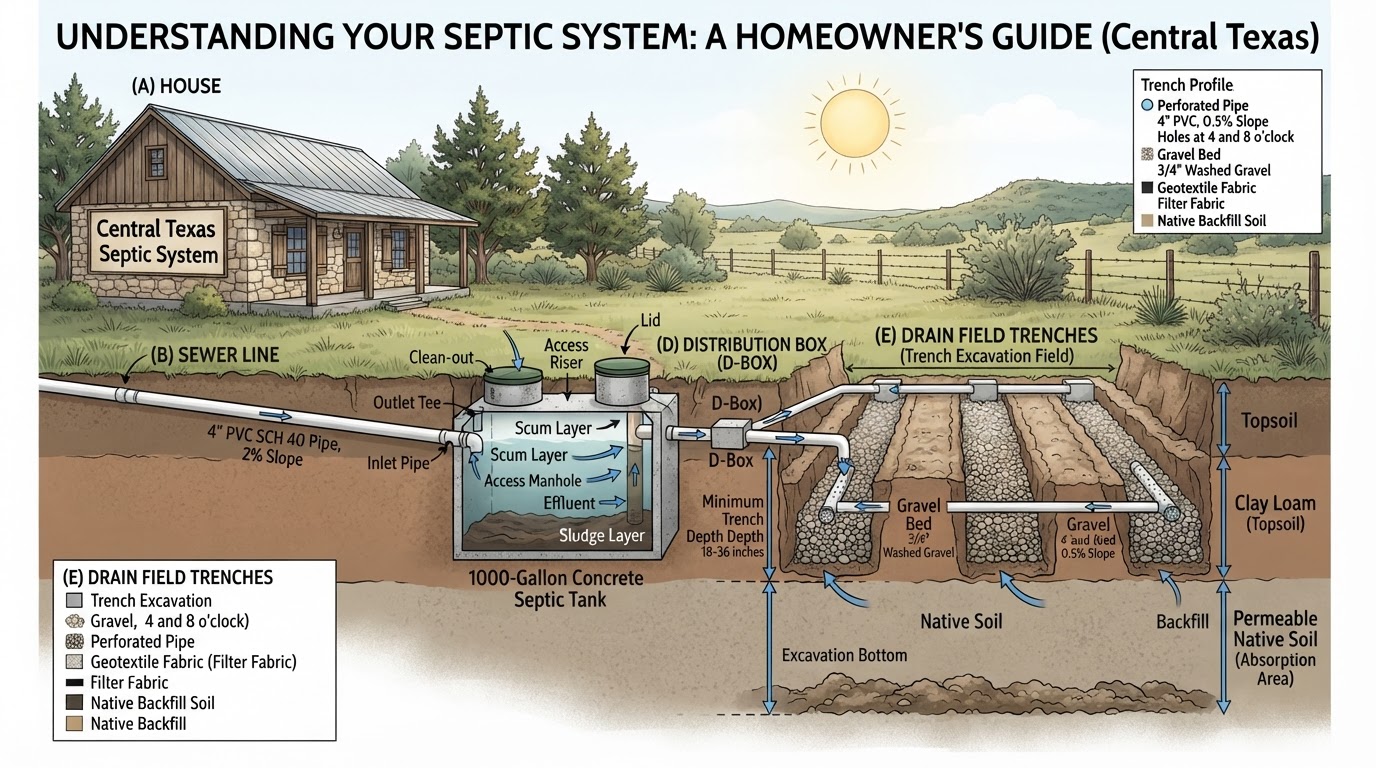
This glossary explains common septic and excavation terms so homeowners and contractors can make informed choices about installation, upkeep, and repairs. We highlight practical points and the typical best practices used by Liberty Septic and Excavating.
Septic & Excavation Key Takeaways | Liberty Septic & Excavating
- Septic systems treat and dispose of household wastewater on-site.
- The tank separates solids and scum; bacteria reduce organic volume.
- Drain (leach) fields spread effluent into soil for final filtration.
- Excavation equipment (excavators, backhoes, bulldozers) prepares sites and trenches.
- Soil and percolation testing determine a site's suitability.
- Routine inspections and pumping (commonly every 3–5 years) prevent failures.
- Excavation safety requires PPE and trench protections with trained operators.
- Advanced or natural-treatment options reduce environmental impact when appropriate.
- Know local regulations and terms to stay compliant and avoid problems.
Glossary of Essential Septic System and Excavation Terms
Quick definitions to keep handy when planning, permitting, or talking with contractors.
- Septic System: On-site system that treats household wastewater.
- Septic Tank: Tank that holds sewage so solids settle and decompose.
- Drain Field: Perforated pipes and stone that disperse effluent into soil.
- Leach Field: Alternate term for drain field; emphasizes seepage into soil.
- Baffle: Tank partition that directs flow and retains scum.
- Perforated Pipe: Pipe with holes to distribute effluent into gravel and soil.
- Soil Testing: Evaluations (including perc tests) of soil absorption and texture.
- Excavation: Earth-moving work to place tanks, pipes, and fields.
Liberty Septic and Excavating sizes and installs systems to match site conditions and local codes.
What Are the Key Components of a Septic System?
A septic system typically includes a tank, a drain field, soil that filters effluent, and connecting pipes. Understanding each part helps you spot issues and ask better service questions.
- Septic Tank: Primary chamber where solids settle and bacteria act.
- Drain Field: Gravel and perforated piping that distributes liquid effluent.
- Soil: Final natural filter that removes pathogens and nutrients.
- Pipes: Convey wastewater from the home to the tank and field.
Regular inspections and timely pumping preserve function and reduce repair costs.
What is a Septic Tank and How Does It Work?
The tank slows household wastewater so solids settle (sludge) and oils/grease form scum. Anaerobic bacteria break down organics; the clarified liquid (effluent) exits to the drain field for soil treatment.
Septic Tank System Definition & Components
A septic tank system includes the tank itself and, when applicable, a drainage field. The tank provides calm settling conditions so solids separate from liquids before the effluent moves on to the drain field for further treatment.
Most tanks require pumping every 3–5 years depending on household size and tank capacity. Liberty Septic and Excavating provides inspections, pumping, and repairs to avoid backups and premature failure.
What Roles Do Drain Fields and Leach Fields Play?
Drain or leach fields are the final on-site treatment for effluent. Perforated pipes in gravel spread effluent so it percolates through soil where physical, chemical, and biological processes remove pathogens and nutrients. Proper design considers soil type, groundwater depth, and setbacks from wells or streams.
Liberty Septic and Excavating designs and installs drain fields to meet local codes and site constraints to minimize contamination risk.
Which Excavation Equipment and Techniques Are Commonly Used?
Site preparation uses the right machines and methods to dig safely and create stable foundations. Common equipment:
- Excavators: Precise digging for tanks and trenches.
- Backhoes: Versatile for smaller digs and material handling.
- Bulldozers: Clearing and moving large soil volumes.
Trenching, grading, and compaction help ensure level placement and reduce settling or drainage problems.
How Is Soil Testing Conducted for Septic Installation?
Soil tests confirm whether a site can absorb effluent and what system type is needed. Typical steps:
- Site Evaluation: Inspect slope, lot layout, and nearby water.
- Percolation Tests: Measure soil drainage rate.
- Soil Samples: Check texture, layering, and filtering ability.
Accurate soil data guides system sizing and siting. Liberty Septic and Excavating performs or coordinates these evaluations.
Field indicators such as soil color and layering are commonly used to estimate limiting conditions and seasonal high water tables.
Septic System Site Selection & Soil Evaluation
Soil color and morphology are often used to estimate seasonal high water tables and to guide system design. For example, low-chroma gray colors can indicate limiting conditions that affect where and how systems are installed, and many state rules reference these indicators when setting standards.
What Are the Basic Terms for Septic Installation and Maintenance?
Common terms on estimates, permits, and reports:
- Installation: Placing tanks, pipes, and fields per design and code.
- Maintenance: Routine pumping, inspections, and small repairs.
- Repair: Correcting leaks, damaged components, or failures.
Using correct terms keeps conversations with contractors and regulators clear and helps ensure the right work is performed.
How Are Septic Systems Maintained and Repaired?
Routine maintenance prevents most issues. Typical tasks include:
- Regular Pumping: Remove sludge and scum (commonly every 3–5 years).
- Inspections: Identify wear, leaks, or blockages early.
- Repairing Leaks: Fix promptly to protect soil and groundwater.
Liberty Septic and Excavating offers full-service maintenance to keep systems reliable.
What Safety and Environmental Terms Should Beginners Know?
Key terms to protect people and resources:
- Contamination: Harmful substances entering soil or water from system failure.
- Regulations: Local/state rules on design, setbacks, permits, and inspections.
- Best Practices: Recommended steps (inspections, proper siting) to reduce risk.
Understanding these terms helps you meet rules and minimize pollution or public-health risks.
What Are Common Excavation Safety Standards?
Excavation has hazards; common safeguards include:
- Personal Protective Equipment (PPE): Hard hats, gloves, eye protection, etc.
- Trench Safety: Shoring, sloping, or shielding to prevent collapse.
- Equipment Safety: Certified operators and routine machine checks.
Following standards protects crews and supports on-time completion.
How Do Eco-Friendly Septic Solutions Work?
Greener solutions reduce environmental impact while treating wastewater. Approaches:
- Advanced Treatment Systems: Aerobic units (ATUs) and other tech to lower contaminants.
- Natural Filtration: Constructed wetlands or planted systems to polish effluent.
- Water Conservation: Lowering water use reduces system load and extends life.
When site and budget allow, Liberty Septic and Excavating recommends and installs appropriate green options.
Frequently Asked Questions
What are the signs that my septic system needs maintenance?
Slow drains, gurgling pipes, foul odors, and wet or soggy yard areas near the tank or field indicate a need for inspection; early service typically limits repair costs.
How often should I have my septic tank pumped?
Most households pump every 3–5 years; frequency varies with tank size, household size, and water use. Ask a licensed provider for a site-specific recommendation.
What should I avoid flushing down the toilet?
Do not flush wipes, paper towels, feminine products, grease, or non-biodegradable items. Avoid pouring harsh chemicals, oils, or solvents down drains because they harm the bacteria that treat waste.
What are the environmental impacts of a failing septic system?
Failing systems can release pathogens and excess nutrients into groundwater and surface water, harming human health and aquatic ecosystems. Timely maintenance and repairs help prevent pollution.
How can I tell if my drain field is functioning properly?
A healthy drain field has no standing water or strong smells and supports normal vegetation. Pooling, unusually lush grass, or persistent odors suggest overload or failure—call a professional.
What are the benefits of eco-friendly septic solutions?
They can produce cleaner effluent, lower pollution risk, and use water more efficiently. Higher upfront costs may be offset by environmental benefits and, sometimes, reduced maintenance.
What regulations should I be aware of regarding septic systems?
Rules vary by jurisdiction and typically cover design standards, setbacks from wells and waterbodies, permits, and inspections. Always check local health-department guidelines and work with licensed installers to ensure compliance.
Conclusion
Understanding septic and excavation basics helps you protect property and local water resources. Use this glossary when planning work, reviewing quotes, or scheduling maintenance. For soil testing, system design, installation, or service, contact Liberty Septic and Excavating for experienced guidance and reliable service.