Practical Guide: Septic Site Assessment & Excavation Inspection
Evaluating a site for a septic system or excavation sets the stage for a reliable installation. This concise guide explains practical, field-proven checks for soil, slope, drainage and permitting so you avoid common mistakes and environmental risks. Use a methodical evaluation to shape a compliant, durable design. Below: evaluation methods, excavation inspection tips, permitting, installation steps, maintenance, and pitfalls to avoid.
Septic Site Assessment Takeaways | Liberty Septic & Excavating
- Check soil texture, slope and nearby water when judging site suitability.
- Inspection during excavation should ensure proper clearing, grading and trench placement.
- Obtain required permits and follow local codes to prevent delays or fines.
- Typical process: consultation → site evaluation → design & permitting → installation.
- Inspect and pump as needed (commonly every 3–5 years) to reduce failure risk.
- Regularly check tanks, drain fields and distribution boxes for damage.
- Never skip soil testing or permits — they often cause failures and legal issues.
- Follow best practices to protect your investment and nearby water resources.
How we evaluate sites
Site evaluation focuses on a few decisive variables: soil behavior, slope, and proximity to wells or surface water. These determine effluent movement and whether a standard or specialized design is required.
- Soil type assessment: Soils control hydraulic conductivity and treatment. Clay retains water and risks slow drainage; sandy soils drain fast but may need measures to protect groundwater.
- Topography considerations: Slope influences runoff and erosion. Steep slopes complicate installation; low-lying areas can pond and reduce system performance.
- Water source proximity: Maintain required setbacks from wells, lakes and streams to lower contamination risk.
Combine simple field tests with local code knowledge to produce a practical, compliant design.
Septic System Vulnerability: GIS, Soil, & Topographic Assessment
Problems from failing septic systems are most common where soils drain poorly, groundwater is high, or flooding occurs frequently. Researchers note gaps in how vulnerability is measured and which factors predict higher rates of replacement and repair. In one study, investigators created a GIS-based framework that blends known system data with a modified Soil Topographic Index (STI) — including seasonal high groundwater — to map septic system risk in coastal Georgia and guide management actions.
Applying these assessment methods early identifies constraints and informs a design that protects public health and nearby waters.
Excavation inspection: practical best practices
Inspection during excavation prevents costly mistakes. Keep inspections focused and systematic:
- Land clearing: Remove vegetation, roots and debris so soil and grade are visible and consistent.
- Grading: Slope soil so surface water drains away; establish a stable, even base for tanks and fields.
- Trenching: Excavate to the specified depth and slope; accurate trenches preserve hydraulic balance and prevent pooling.
These basic checks reduce installation errors and support long-term performance.
Permits & regulatory considerations
Compliance protects health, property value and the environment. Before digging, confirm local requirements and schedule needed reviews:
- Permits and approvals: Most jurisdictions require permits and staged inspections with a site plan.
- Local code compliance: Codes vary — verify setbacks, materials, minimum sizes and maintenance obligations.
- Inspection schedules: Some areas require periodic inspections or proof of maintenance; know those timelines to avoid penalties.
Contact your local health department or a licensed professional early to smooth approvals and avoid rework.
Installation overview
Installation follows a standard sequence so the system matches site and regulatory requirements. Steps include:
- Initial consultation: Discuss capacity, site constraints and goals with a qualified contractor or engineer.
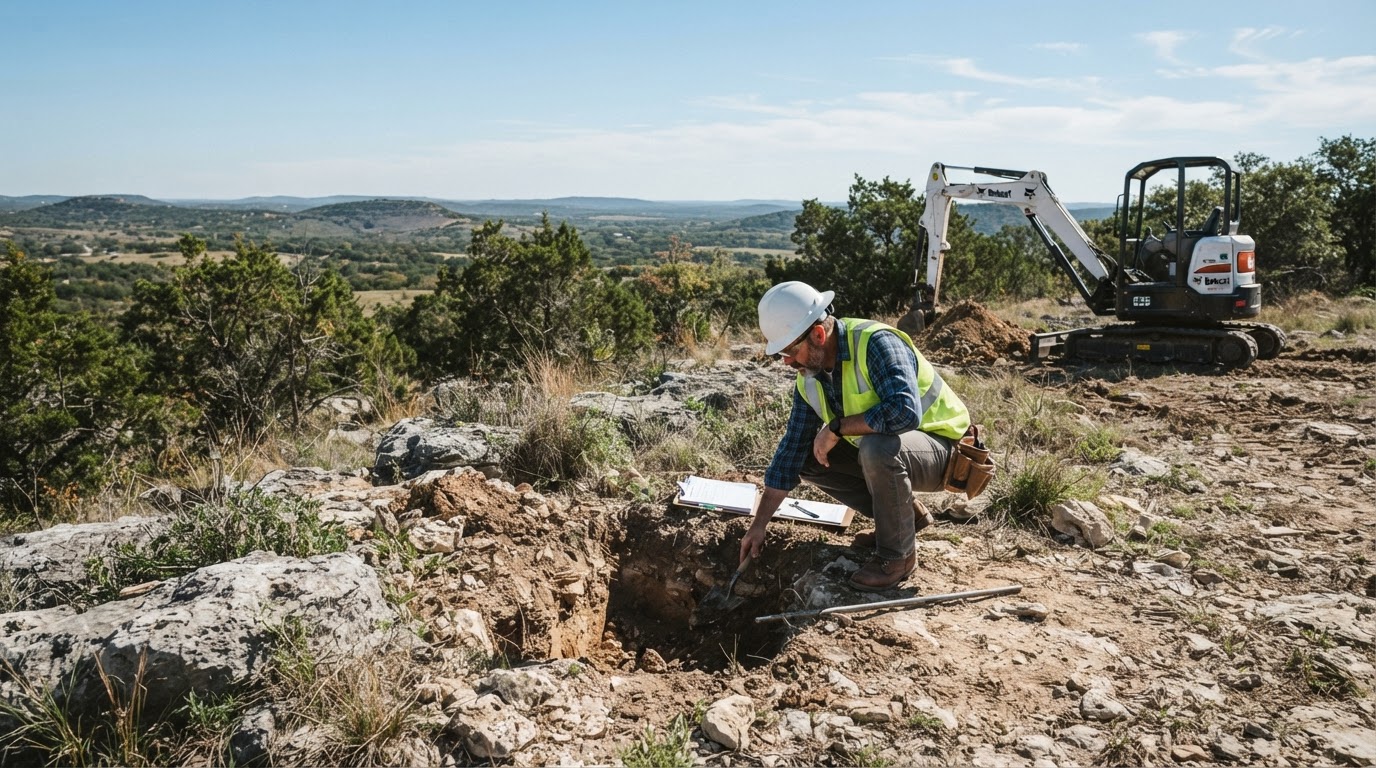
- Site evaluation: Conduct soil tests, slope measurements and setback mapping to inform layout.
- System design and permitting: Produce a code-compliant design and obtain permits guided by site data.
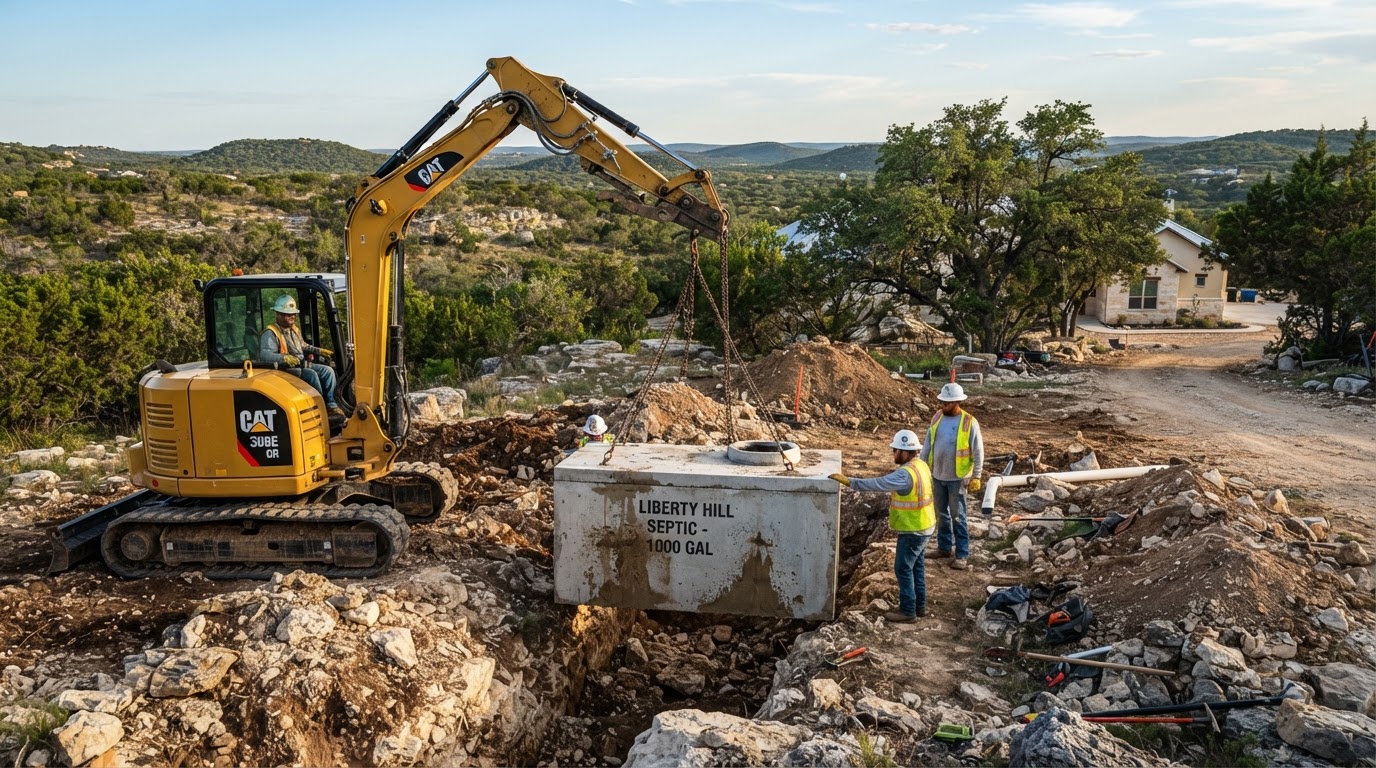
- Installation: Place the tank, lines and drain field per approved plans, then complete required inspections and sign-offs.
Liberty Septic and Excavating uses field experience and permitting knowledge to tailor installations to each property's conditions.
Maintenance and inspection
Routine maintenance preserves system function and extends service life. Key tasks include:
- Routine maintenance: Schedule pumping and service as recommended. Many systems need inspection and possible pumping every 3–5 years, depending on household use.
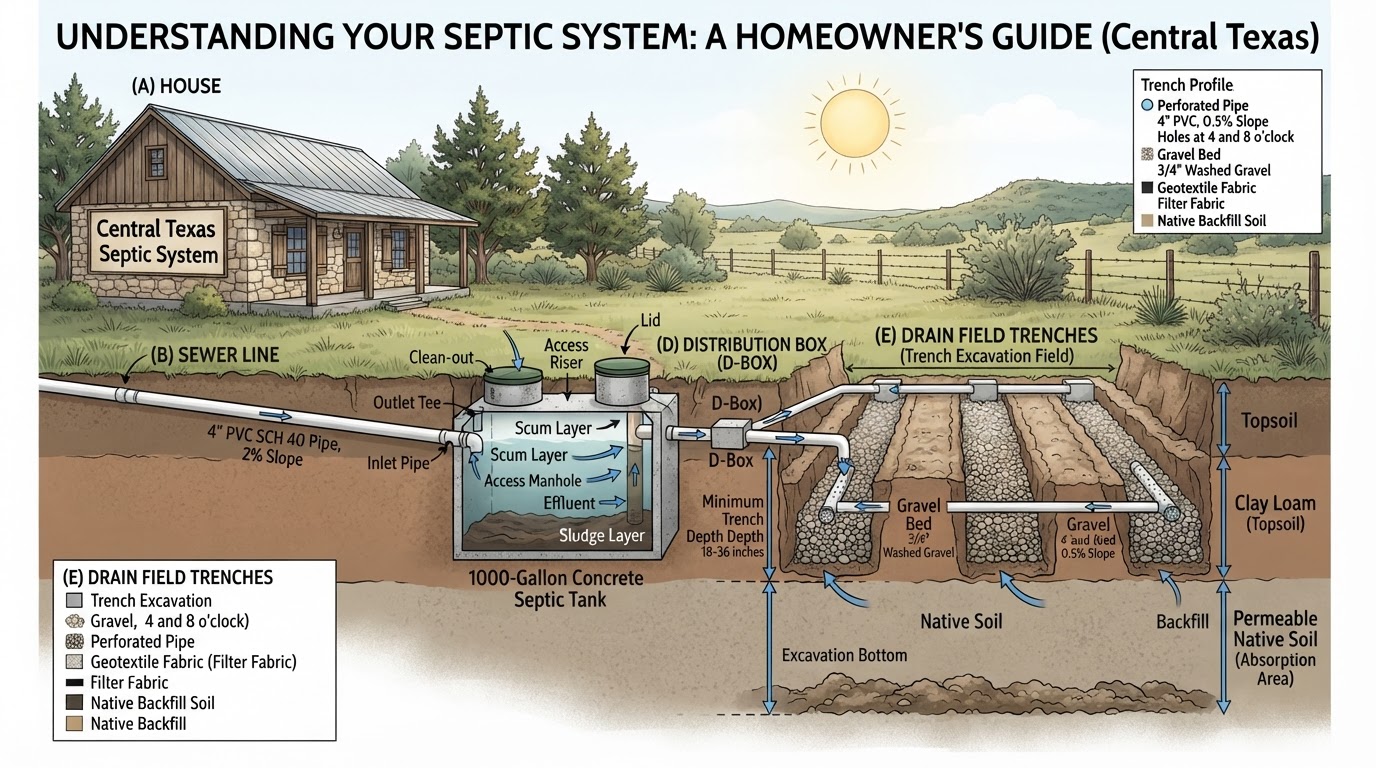
- Key components to check: Inspect the tank, distribution box, pipes and drain field for leaks, settling, odors or surfacing effluent; repair early to avoid large replacements.
Consistent maintenance is the most effective way to avoid emergencies.
Common pitfalls to avoid
Frequent mistakes lead to failures. Watch for these:
- Ignoring soil quality: Don't skip soil tests; visual checks alone can mislead system sizing.
- Neglecting permits: Installing without permits risks fines, forced changes or removal.
- Inadequate maintenance: Deferred upkeep increases backup and field failure risk.
Address these early to reduce costs and protect the environment.
Frequently Asked Questions
What are the signs that my septic system needs maintenance?
Slow drains, gurgling, sewage odors near the tank or field, and pooling water are warning signs. Schedule an inspection promptly; routine pumping and checks prevent larger problems.
How can I determine the best location for a septic system on my property?
Pick well-draining soil, a gentle surface slope, and maintain setbacks from wells and waterways. A professional site evaluation with soil testing and setback measurement provides the safest placement.
What are the environmental impacts of a poorly installed septic system?
A failing system can contaminate groundwater and surface water, harm aquatic life, and create public health risks. Proper design, installation and maintenance greatly reduce those impacts.
What permits are typically required for septic system installation?
Most areas require a site evaluation permit, design approval and an installation permit with staged inspections. Check with your local health or permitting office early for exact steps.
How often should I have my septic system inspected?
Inspect every 3–5 years as a general rule; frequency depends on system size and household water use. Regular inspections catch blockages, leaks and wear early.
Can I install a septic system myself, or should I hire a professional?
Because of soil testing, design and permitting, hiring a licensed professional is strongly recommended. Professionals know local codes and avoid common, costly mistakes.
What should I do if my septic system fails?
If the system fails, reduce water use and contact a licensed septic professional. They will diagnose the issue and recommend repair or replacement to limit environmental and property impacts.
Conclusion
Thorough site assessment and careful excavation inspection are essential for a durable septic system. Evaluate soil, slope and setbacks, follow permitting requirements, and maintain the system regularly to avoid failures and protect nearby water resources. For site-specific help, contact our team to guide you through evaluation, permitting and installation.