TCEQ Compliance: What Every Central Texas Homeowner Needs to Know

If you own a septic system in Central Texas, you operate an On-Site Sewage Facility (OSSF) governed by the Texas Commission on Environmental Quality (TCEQ). Understanding what it means to be "TCEQ-compliant" isn't just about following the law — it's about protecting your property value, your groundwater, and your wallet from massive fines and repair bills.
What is the TCEQ and Why Do They Regulate Septic Systems?
The Texas Commission on Environmental Quality is the environmental agency for the state. They establish the minimum standards for the planning, construction, operation, and maintenance of all OSSFs in Texas. Because poorly treated sewage can contaminate local groundwater, rivers, and lakes, the TCEQ strictly monitors how wastewater is handled on rural and suburban properties.
In Central Texas, counties like Burnet, Williamson, and Travis act as authorized agents for the TCEQ. This means your local county health or environmental department issues the permits and performs the inspections, but they are enforcing TCEQ state law.
Texas Administrative Code (TAC) Title 30, Chapter 285
This chapter of the Texas Administrative Code outlines the specific rules for On-Site Sewage Facilities, including site evaluation requirements, minimum setback distances, and mandatory maintenance contracts for aerobic systems.
What Does "Licensed and Compliant" Actually Mean?
When a contractor says they are TCEQ-licensed, it means they hold a specific, state-issued credential to install or maintain septic systems. There are two main installer licenses in Texas: Installer I (for standard conventional systems) and Installer II (for complex and aerobic systems).
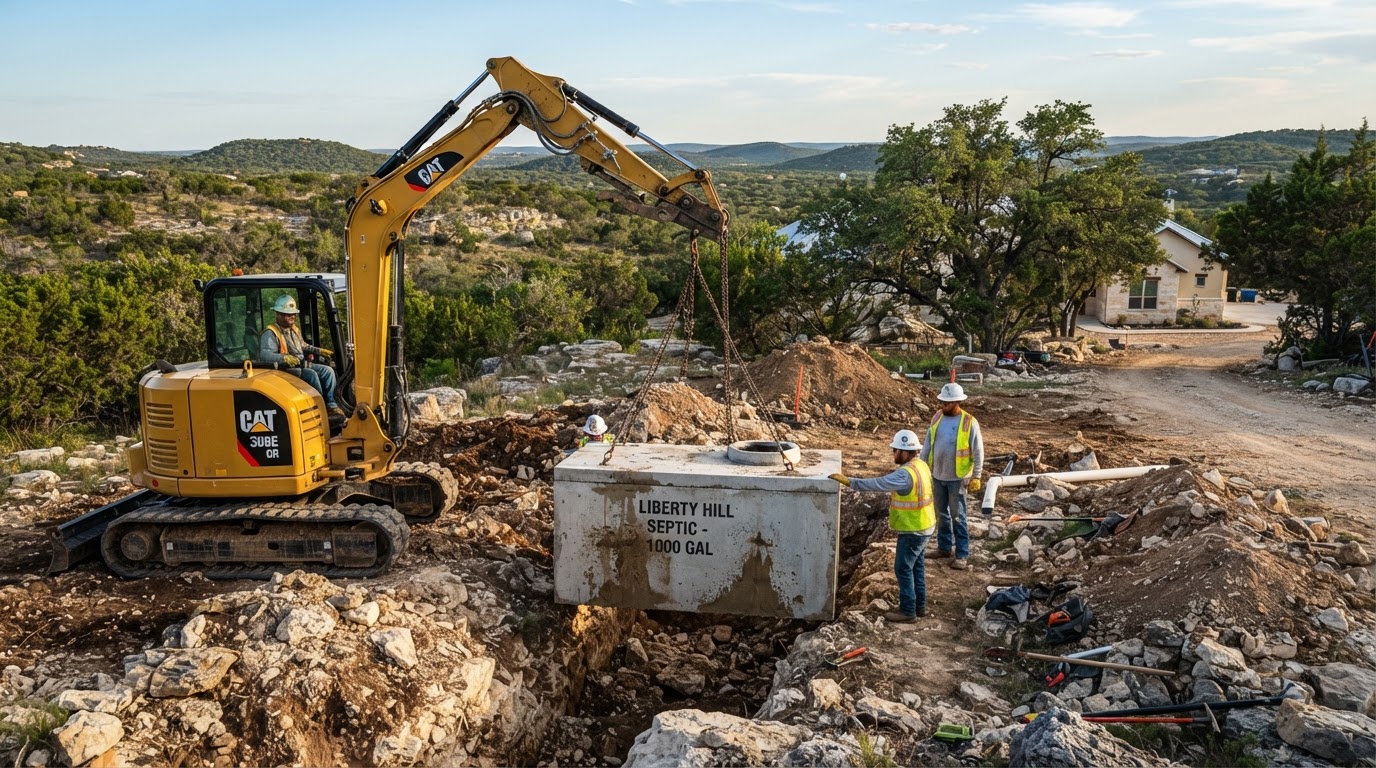
An installation is only compliant if it follows a design created by a registered sanitarian or professional engineer, receives an Authorization to Construct from the county, and passes a final inspection before the system is covered with dirt.
Homeowner Responsibilities Under TCEQ Rules
Once the system is installed and approved, the legal responsibility for its operation shifts entirely to you, the homeowner. TCEQ rules dictate several ongoing requirements:
- Aerobic System Maintenance Contracts: If you have an aerobic treatment unit (ATU) with surface application, TCEQ requires you to maintain an active maintenance contract with a licensed provider. They must inspect the system every 4 months and submit reports to the county.
- Chlorine Maintenance: For aerobic systems, homeowners are legally required to keep the chlorinator filled with approved wastewater chlorine tablets (not swimming pool chlorine, which is a fire hazard and illegal to use in OSSFs).
- Addressing Failures: If your system fails (e.g., sewage pooling on the ground or backing up), you are legally required to have it repaired by a licensed professional. Ignoring a failing system can result in daily fines from the county.
The Risks of Non-Compliance
Failing to comply with TCEQ regulations can be costly. If a county inspector discovers an unpermitted system or a failing drain field, they can issue notices of violation. If ignored, these violations can escalate to criminal misdemeanor charges and hefty daily fines. Furthermore, you cannot legally sell a property in Texas with a known, unpermitted, or failing septic system without disclosing it, which will severely impact your property value.
Need Help with TCEQ Compliance?
Don't guess when it comes to state regulations. Liberty Septic & Excavating is fully licensed by the TCEQ and has been keeping Central Texas homeowners compliant since 2007. Contact us today for an inspection or consultation.
Schedule a Consultation